
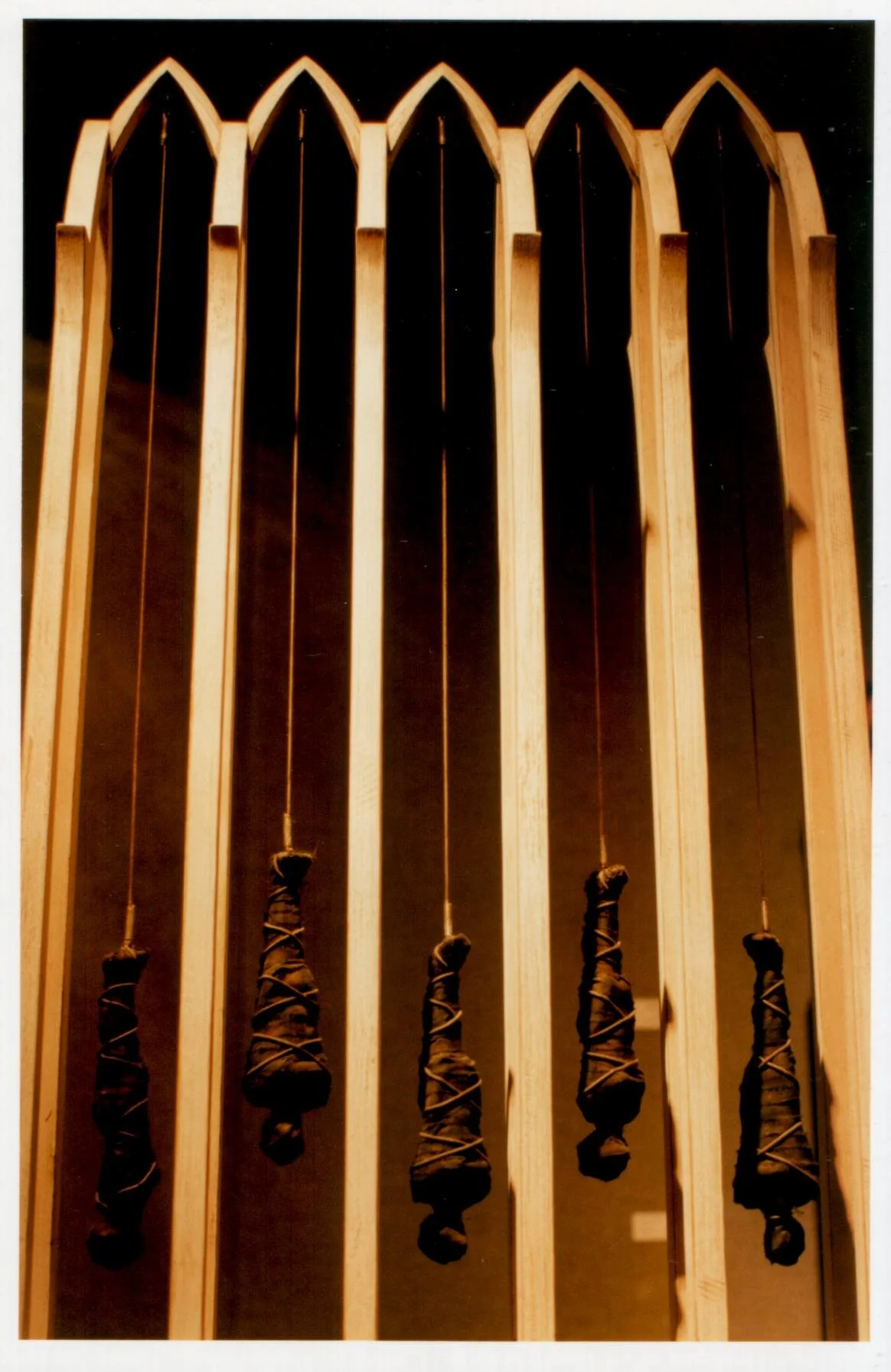
What Does it Mean to Be Productive?
Here in the US, a lawyer recently wrote an opinion piece that questioned whether we should really be tanking our economy in order to save a few unproductive elderly people. After all, he mused, they are a drain on society, and they are no longer productive. Really, they should gladly lay down their lives in order to preserve a strong economy for future generations. This got me thinking, how much is a life actually worth? And what does it mean to be productive?
Here in the US, a lawyer recently wrote an opinion piece that questioned whether we should really be tanking our economy in order to save a few unproductive elderly people. After all, he mused, they are a drain on society, and they are no longer productive. Really, they should gladly lay down their lives in order to preserve a strong economy for future generations. This got me thinking, how much is a life actually worth? And what does it mean to be productive?
When we care for others, offer a shoulder or an ear when they need support, when we look after and engage with our children and grandchildren, or when we cook a nice meal, or make someone laugh, are these things not productive? Well, in the eyes of capitalism, they are not. Productive activities are those that generate wealth, that increase a growth skewed GDP, that grow, grow, grow our economy. Caring for others might grow connections, or relationships, or happiness, but it does not grow the economy.
When productivity is inextricably linked to wealth generation and not much else, and we emphasize market growth at all costs, we become a kind of cancer on the world. It’s no surprise that recent shots of the Earth from space show a world momentarily cleared of pollution. The earth is heaving a huge sigh of relief right now, while its human inhabitants panic.
So, it turns out, researchers have tried to figure out how much a human life is worth, the answer is anywhere between two and ten million dollars, depending on the country. So what we are doing now, the lives that we are saving, they are worth it. Every grandmother, grandfather, aunt, uncle, mother, father, friend, sister and brother. If you want to read more about the value of a statistical life, click HERE.
Illustrating Burn-Out

Little Match Girl
Is burning herself out
After a long period of making and writing and painting and developing… I needed a break. This painting illustrates the concept of burn out. We all experience this at one time or another. This is why it’s so important to replenish ourselves. Sleep, eat, laugh, hold hands, cuddle a pet, watch a disaster movie, etc. Whatever your jam, give yourself a chance to re-boot.
Think of how flowering plants feel after a summer’s worth of blooms. They retreat. They hunker down. They hibernate. So as spring approaches, I’ll be venturing out into the garden to dig and prepare the ground for growth. And as I do, maybe my mind can prepare my creativity for growth as well.

Creative Tip:
Try planting several seeds in your garden or in a pot (literally, go on, plant some). And as you do, imagine each one of those seeds is an idea. Now, let those ideas percolate in your mind. Water them, give them light and a bit of fertilizer. Then watch them grow.
Nasal Breathing How To
In this video I walk you through nasal breathing. It’s good for heart health, stress and circulation. Read more about the benefits here.
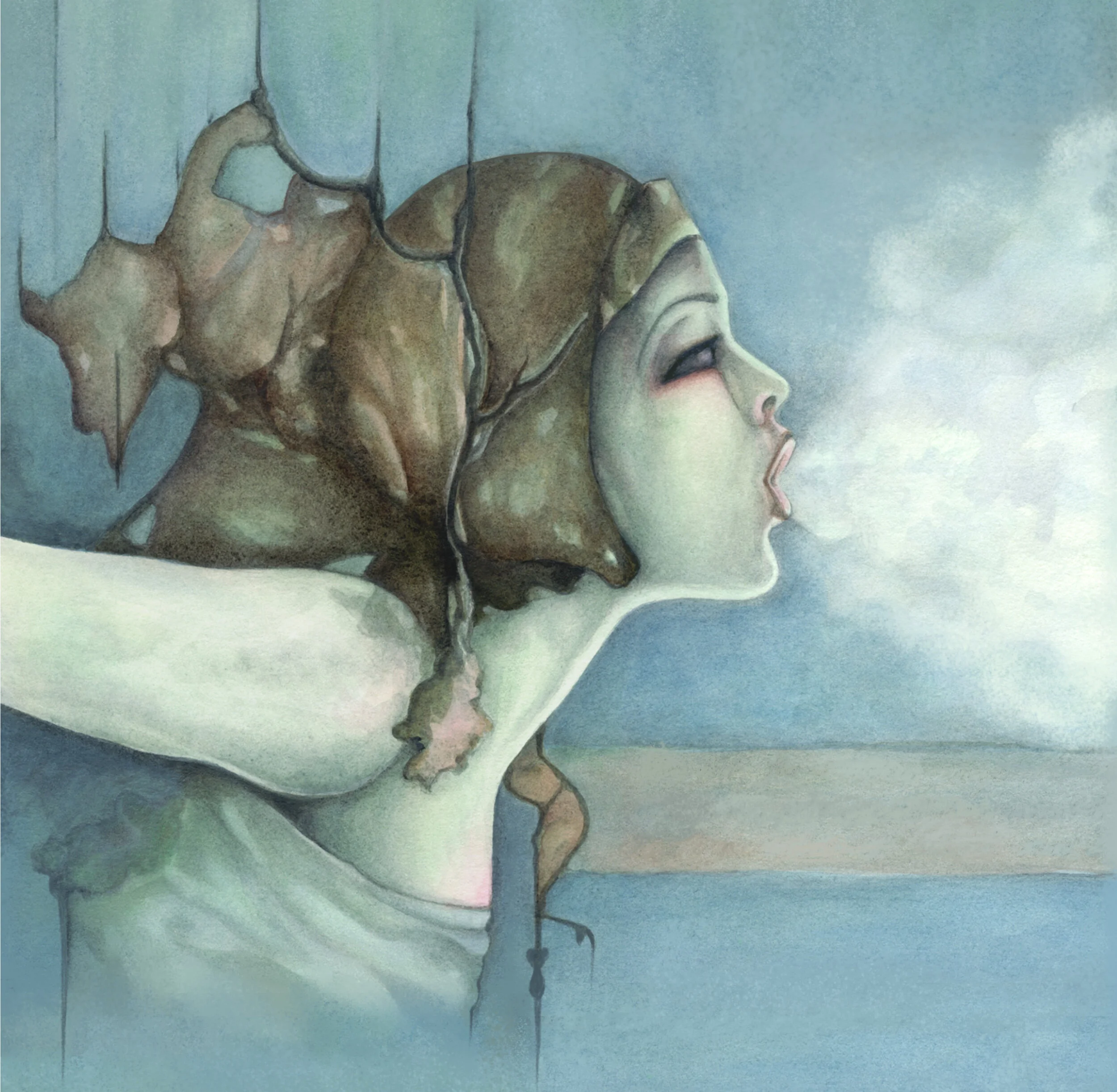
The Importance of Breathing In
In workshops, I often talk about the importance of breathing in AND out. When you breathe in, you take in from the world. You absorb new information and ideas. When you breathe out, you create, you communicate, you help, you guide and you build.
In workshops, I often talk about the importance of breathing in AND out. When you breathe in, you take in from the world. You absorb new information and ideas. When you breathe out, you create, you communicate, you help, you guide and you build. You take all of that information, knowledge, insight and curiosity and you send it back out into the world in new forms. This takes energy, time and work. Sometimes it's important to stop making, to stop doing, to stop directing and forcing and trying, and to simply breathe in for a while.
As we hunker down over the next few weeks inside covid-19 cocoons, it’s a wonderful opportunity to do just that.
So, is there anything new you would like to learn? A recipe you would like to try? A dance you would like perform? A book you would like to read? Now is the time to open your eyes to the world. To be inspired, to explore, research, watch and admire. And to engage with yourself and others with an open and curious mind.
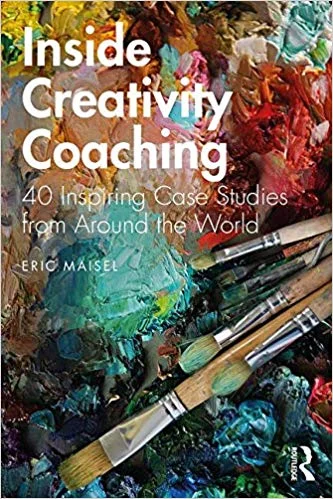
Inside Creative Coaching - OUT NOW!
I wrote a chapter for the book ‘Inside Creative Coaching’ entitled ‘Cracks in the Pavement: Liminal Spaces & Creativity’. It’s available on Amazon. HERE: Continue on to read an excerpt:

‘Inside Creative Coaching’ available on Amazon. HERE.
I wrote a chapter entitled ‘Cracks in the Pavement: Liminal Spaces & Creativity’. Excerpt below.
Case Study : Susanne
“What is your first memory of being creative?”
I often ask this question to reveal clients’ creative stories, to get a sense of their beliefs about creativity and how those beliefs might be impacting their current situation.
Susanne pauses and stares upward, searching.
“I guess in a way, it was dancing as a little girl, but because I [attach] that so much to my work...” she trails off.
Susanne came to me at a threshold in her career. She’d already made several significant transitions in her life: she’d been a professional dancer, a massage therapist, and a choreographer with her own company. Then she became a mother and moved to the countryside. Most recently, she returned to the city with her family and began a freelance choreographer career. Now, she was at a crossroads once again, attempting to determine her best path forward.
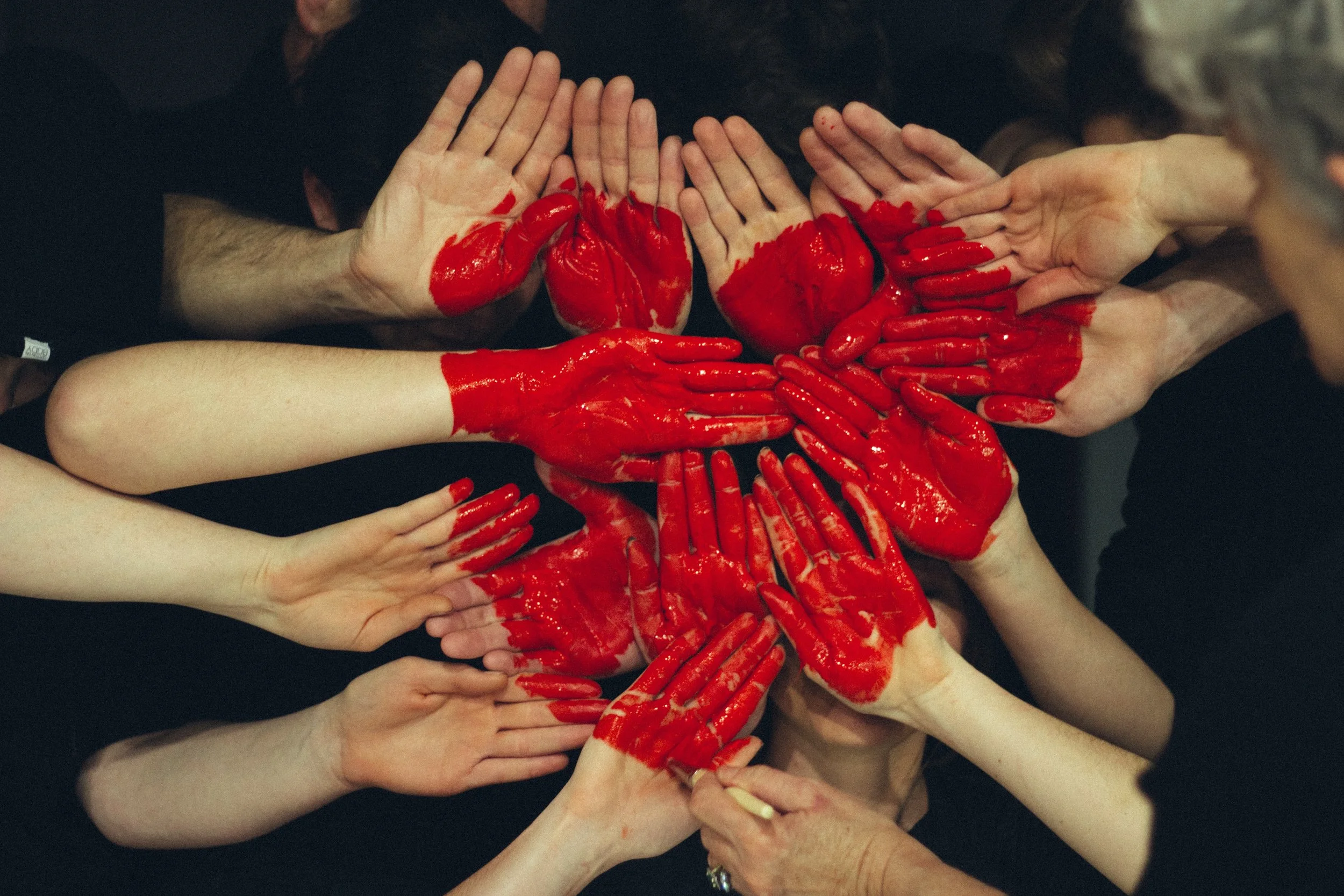
Creative Collaboration
Creative collaboration is about more than great ideas. It’s also about listening and communicating your story and your ideas effectively. I’m offering a new workshop that develops the specific skills needed to collaborate well. Interested? Head over to the workshops page to find out more.

Photograph by Tim Marshall on Unsplash
Creative collaboration is about more than great ideas. It’s also about listening and communicating your story and your ideas effectively. I’m offering a new masterclass that develops the specific skills needed to collaborate well. A person might be talented and smart, but if they can’t work well with others, their talent can be wasted. Learn how to listen deeply, build rapport and trust, to know your values and communicate them effectively. Join me and discover how to use your creative voice to connect with yourself and others through authentic persuasion. Interested? Head over to the masterclasses page to find out more.
The Power of Stories
I LIKE TO MAKE THINGS UP I’m pretty sure my parents would call it ‘lying’. I call it ‘embellishing the truth’. My partner calls it ‘making things up’. The first time he saw the depths of this of tendency was in 2008. He asked me if I had washed a spoon.

Photo by Patrick Fore on Unsplash
I LIKE TO MAKE THINGS UP I’m pretty sure my parents would call it ‘lying’. I call it ‘embellishing the truth’. My partner calls it ‘making things up’. The first time he saw the depths of this of tendency was in 2008. He asked me if I had washed a spoon.
“Sure” I said. “Really?” he asked, eyebrow arched.
“Yup. Totally washed it”.
“So, you washed it, then put it back precisely where it was when it was dirty?”
I paused. “Erm, yes, that’s precisely what I did”.
“Really?” He said.
“Uh huh, really”, I muttered. Eyes down.
“Um, did you just lie about the spoon?” He asked, somewhat incredulous.
“Yes!” I broke down, finally ready to confess. “I lied, because I didn’t want to wash it, and I like to make things up.”
He looked at me for a beat and then...he burst out laughing. To him, it was so absurd that I would lie about such a small thing. To me, his response, his laughter, made me feel for the first time like I was 100% accepted by someone else. And as a result, I finally began to 100% accept myself. Warts, lies and all.
THE POWER OF STORIES I still make things up. All. The. Time. But usually I do it for more magnanimous purposes. To construct and tell great stories. Because I believe we make sense of the world through stories. We build identities and relationships around narratives. We learn about other people and other places. We develop empathy as we watch and relate to different characters. And we share our own thoughts, emotions and hearts with the world, one act at a time.
What's Wrong with the Turtle?
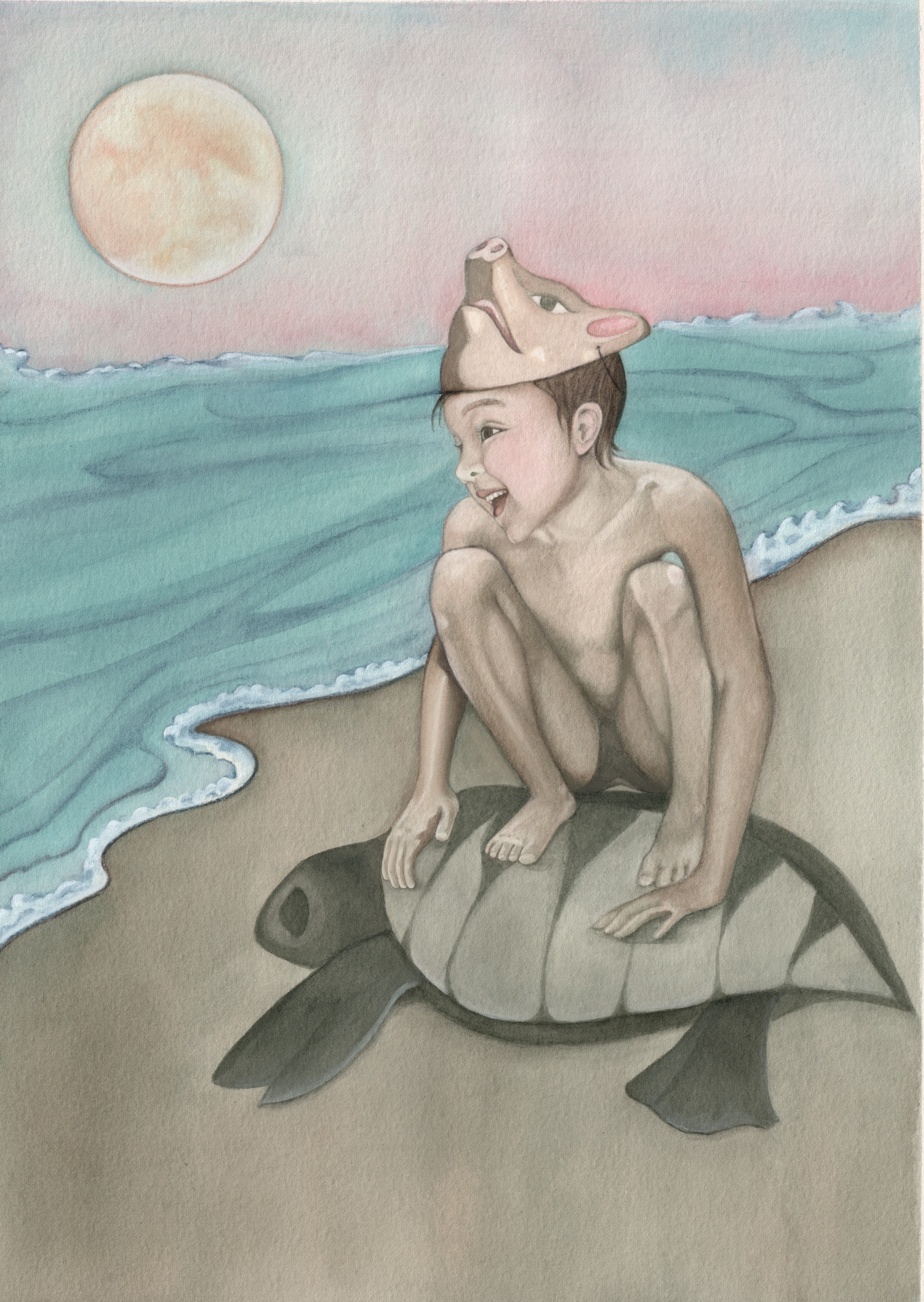
WHAT’S WRONG WITH THE TURTLE?
Back in the 70s, babies / toddlers weren’t given glasses and their eyes weren’t tested. So in hindsight, I think I was pretty myopic as a toddler. I drew tiny circles in one of my dad’s rare books when I was two. He didn’t believe a two year old was capable of such a thing and blamed the housekeeper. My myopia has continued to shape me and my perceptions.
WHAT’S WRONG WITH THE TURTLE? Back in the 70s, babies / toddlers weren’t given glasses and their eyes weren’t tested. So in hindsight, I think I was pretty myopic as a toddler. I drew tiny circles in one of my dad’s rare books when I was two. He didn’t believe a two year old was capable of such a thing and blamed the housekeeper. My myopia has continued to shape me and my perceptions. I have a tendency to focus on the details, and to lose sight of the bigger picture. Ironically, in my 40s, I started losing my close vision as well. So now I’m adjusting to a world that is blurry regardless of distance. Now, I will have to learn to see without seeing.
I finally had my eyes tested for school and it became clear that I couldn’t see. So begins the march of bad glasses. From the age of five, my eyes were hidden away behind huge bottle-cap lenses, inside plastic 70s, then 80s frames. It’s ironic that those styles came back into fashion in the late noughties. I wear that style now.
I also developed a lazy eye, called in ‘squint’ in the UK. My right eye would wander back and forth, looking for something to settle on, something to see. I imagine it was disconcerting. I imagine it made me look a little crazy. I had an operation on my eyes at 6. I remember counting backwards from ten, then waking up in the hospital with both of my eyes patched. I was blind for my time in there. I can’t remember how long it was.
What follows is my strongest memory from childhood. The catalyst of my story, the thread that binds my journey together. I was taken to the playroom everyday. There were toys, there were other children, there were books. And I remember forming very clear pictures of what everything looked like. So when my father came to pick me up from hospital, I insisted we visited the playroom first, now that my eyes were patch free. Now that I could see. Well, sort of see. Everything did look like a reflection in a fun-house mirror as my eyes and brain tried to communicate with each other like two drunken sailors.
So, we get to the playroom and...I’m horrified. NOTHING looks like I had imagined. Nothing looks like it was supposed to. And everything seemed darker, plainer, and well...less interesting.
“What’s wrong with the turtle?” I asked.
“What do you mean?” my father responded.
“It doesn’t look right” I said. “this isn’t the same turtle.”
My father grabbed an orderly.
“Is there another toy turtle?” he asked.
“Not that I know of” said the orderly.
That’s when I first realized that the real world kind of sucked. And my imaginary world was glorious. So I started to hang out there, in my head, as much as I could.
I read book after book after book. I begged my parents to finally get a TV. We didn’t have one, which of course made us nerds and weird. Now, I kind of agree with my parents decision not to. So I listened to story records instead, which was a thing in the 70s. I made dolls out of corn husks. Yes, we still did that in the 70s too. And I road my green Schwinn bicycle deep into the wide expanse of prairie that surrounded our house. Because the prairie was so empty and desolate, I pretended I was the last person on earth. I played with my doll house and made various deals with God. Of course he never kept up his end of the bargains… I wasn’t necessarily happy, but I wasn’t unhappy either. In general, I was dissatisfied with the world, and in many respects, I still aim. The world doesn’t look or act like I imagine it should or it could. I had a choice. I could either escape into my fantasies permanently. And trust me, that is so tempting. Or I could try and find some beauty in the real word with all of its injustice and unfairness, its scarcity and inequality, and of course its stupid mosquitoes.
WHAT’S WRONG WITH ME? I had developed a lisp, perhaps because of the Spanish accent, or possibly because a slight lisp runs in the family. My grandmother had one, my mother has the hint of one. My explanation was simply that my tongue was too large for my mouth. I have a very small mouth. I still lisp a little to this day, when I’m tired. I remember standing in the corner repeating the word ‘s’. An exercise given to me by the speech therapist.
My parents still say, “you didn’t stand in the corner!”
“Tsk, you make yourself sound like a street urchin”.
But my memory was, I stood in the corner. Perhaps I imagined this detail, because I remember feeling as if something was wrong with me.
This sense of not being quite right, of not fitting in, of feeling wrong has persisted throughout my life. It bleeds into the work I do, which is never good enough. But I know I am not the only person to feel this way. And I am able to acknowledge this feeling without giving it total power. I am now able to accept that the process of striving, of learning, of experimenting, of creating is enough. I know I’ll never reach ‘perfection’ but I can enjoy trying. This is why I trained as a coach. And why I set up Compasso. When we reach out to others, we realize that we are not alone, we all feel wrong sometimes and that feeling can sometimes be right.
Inside Creativity Coaching
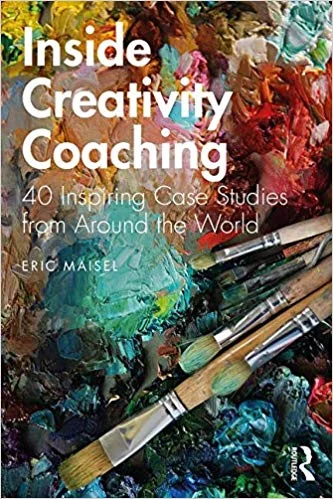
I recently wrote a case study for ‘Inside Creativity Coaching’ by Eric Maisel.
I recently wrote a case study for the book ‘Inside Creativity Coaching’ by Eric Maisel. The book will be published in October 2019 but it is already available for pre-order on Amazon HERE.

My Story: Chapter One
I was born in Colorado in 1970. According to my mother, I was a ‘difficult’ baby. I had colic, I had respiratory infections, I had worms. I was also an incredibly light sleeper (still am) and then, as now, I seemed to absorb the emotions of those around me. My mother was anxious after I was born. The world at the time seemed like it was coming apart at the seams. Assassinations, the Vietnam war, Nixon.

The prairie in Colorado where i grew up. Incidentally, this is where Badlands was shot.
WHERE I CAME FROM
I was born in Colorado in 1970. According to my mother, I was a ‘difficult’ baby. I had colic, I had respiratory infections, I had worms. I was also an incredibly light sleeper (still am) and then, as now, I seemed to absorb the emotions of those around me. My mother was anxious after I was born. The world at the time seemed like it was coming apart at the seams. Assassinations, the Vietnam war, Nixon. The grandmothers weren’t particularly helpful. Instead, they dropped subtle criticisms, like psychological water torture, and blamed my distress on my mother’s parenting. So my parents decided to get the hell out of dodge. They packed their belongings into a trunk and a few suitcases and moved to Mexico. I was four months old and my sister was two.
My father was researching Mayan cultural life, whilst also undertaking a masters in creative writing and teaching at the University of Americas. My mother was an RA for the University dorms. Their money went much further in Mexico, so we had a housekeeper/nanny. We lived in a small village. My sister and I could run wild safe in the knowledge that we were under the watchful eye of students and the residents.
I learned Spanish and English simultaneously. So I was as fluent in Spanish as a Mexican toddler would be. I knew that my father’s Spanish was ‘muy mal’, so I spoke English with him, Spanish with my mother and the nanny. And both with my sister.
We moved back to the United States just before I turned five. My parents decided it would be better for us girls if we were educated in American schools. I often wonder whether they were ultimately happy with that decision. Still, we did it. We moved to the badlands of southern Colorado, where my grandparents lived. And my parents bought a ramshackle farm house on a huge plot of land lined with fruit trees and old oaks.
WHO AM I? LIMINAL SPACES & IDENTITY
When I was in kindergarten, the teacher, in a possibly misguided attempt to help us understand difference and inclusiveness, asked the ‘Anglo’ kids to stand up. Then she asked the Mexican kids to stand up. I stood up. After all, I had brown skin (from being outside), I spoke Spanish, and in my child’s mind, I came from Mexico. I was asked to sit down. I was confused. If I wasn’t Mexican, than who was I? This quest to understand the self, to make sense of a life that was often lived in the margins, started here, at the age of five, in a small town classroom.
This sensation of being neither one thing nor another - not Mexican, not really American – has been the thematic template for my life. I moved to the United Kingdom when I was 19 and became a British citizen, but I wasn’t really considered British by the Brits. And when I returned to the USA, people thought I was British. So yeah – neither British nor American – the theme continued.
I realize in retrospect, that this feeling of being in-between is an expression of liminality. The word liminal comes from limen meaning “threshold”. So a liminal space is the space in between, a sort of limbo. The concept of liminality was developed by anthropologist Victor Turner to describe the middle stage of a rite of passage. But liminality can exist outside of ritualized spaces. When you are on the threshold, you haven’t left one world or entered another...yet. Being in-between can feel strange in a society that prizes action and decisiveness. It can appear wishy-washy.
If you choose to have an identity which is essentially liminal, it can also make others uncomfortable. I’ve often been asked, “So what nationality are you really? Do you feel more British or more American?” Human beings often categorize other people in the simplest of terms, because that makes them easier to understand and easier to contain. Those who identify as bi-sexual or mixed race can also feel like they must choose between one identity or another. They cannot be both. They cannot remain in-between. The reality is, I am both British and American. I am a dual national who also grew up in Mexico. I am of English speaking heritage but I learned Spanish before I learned English. I am an artist who is also a writer and a choreographer. I am a choreographer who works in film. And in that context, I’m usually listed in the miscellaneous category. The place where you put things that don’t easily fit anywhere else. I am and always will be in-between, which is actually an identity in and of itself.

Intuition Process
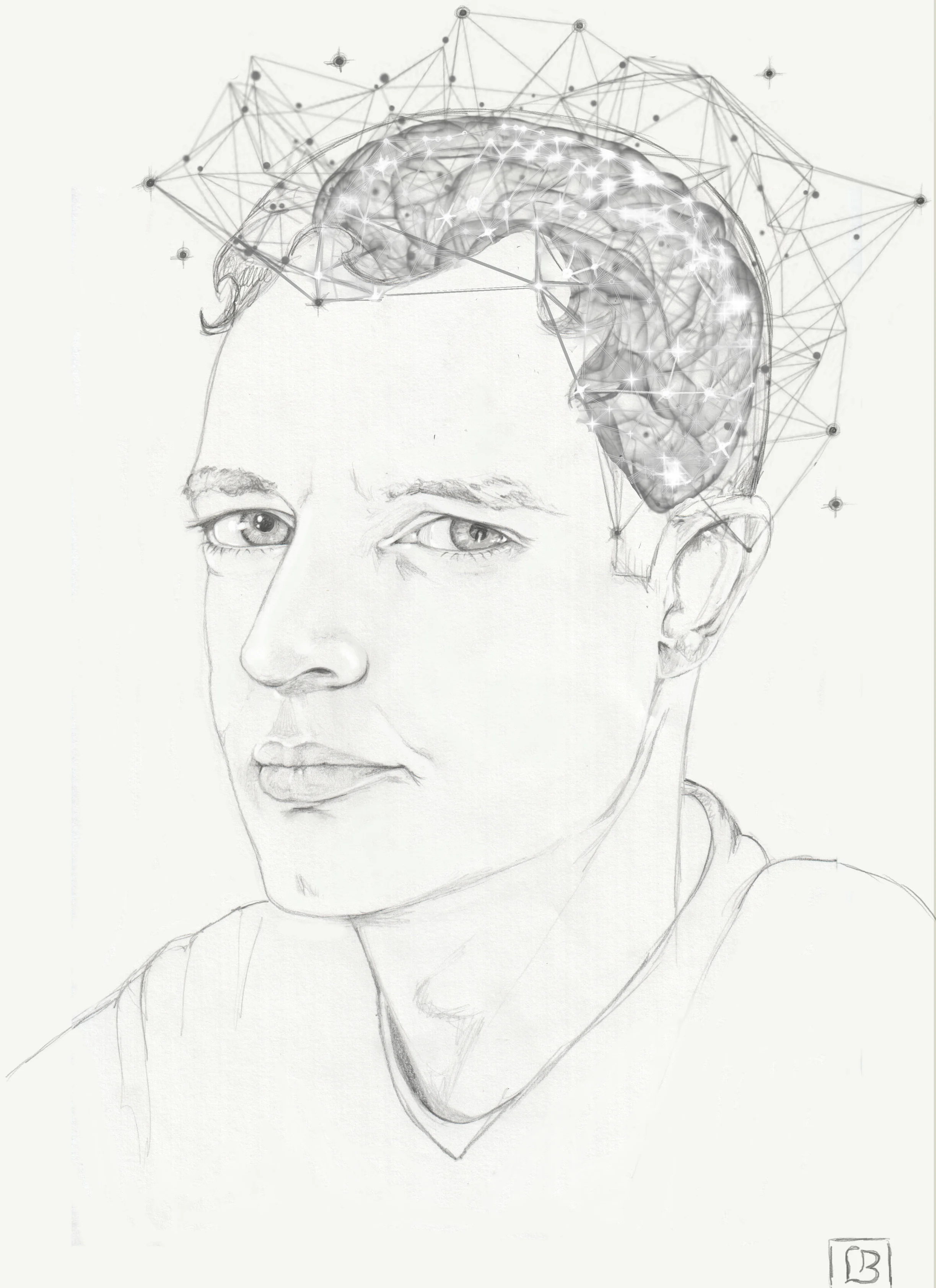
This is the creative process for my 'Intuition' card. Firstly, I wanted to do something that depicted the way the brain fires in rapid patterns. I think this is how intuition works in a way. The brain fires so quickly, it seems like an idea or a solution to a problem comes from the big blue,


This is the creative process for my 'Intuition' card. Firstly, I wanted to do something that depicted the way the brain fires in rapid patterns. I think this is how intuition works in a way. The brain fires so quickly, it seems like an idea or a solution to a problem comes from the big blue, but in actual fact, pieces of it have been floating around in your brain for a while. It's just a matter of making the connections.
This lead to the idea to use a crown of stars to show this process. Each star represents a thought node and the lines between are the pathways that form between thoughts.
My lovely colleague / friend, Reshma Gajjar offered to model. I went through her instagram feed and used a variety of photos and videos to familiarize myself with the contours of her face. Then I created the initial sketch.
After that, I painted the mid-tones and the shadows. I used diluted acrylic on water-color paper. For the creative deck, I often use cheaper, light weight paper that is very smooth, so the paint dries incredibly fast. A variety of techniques can be used to create a smoother finish, but in my opinion, I wasn't entirely successful here.
Next, I scanned in the original and added a background that I had painted previously. I also fixed a few mistakes, smoothed out some of the harsher lines and darkened the shadow along the jaw.
Finally, I added the brain/star map using an airbrush in Mypaint. I have a drawing monitor with a pressure sensitive pen that works well for this.
New Starts
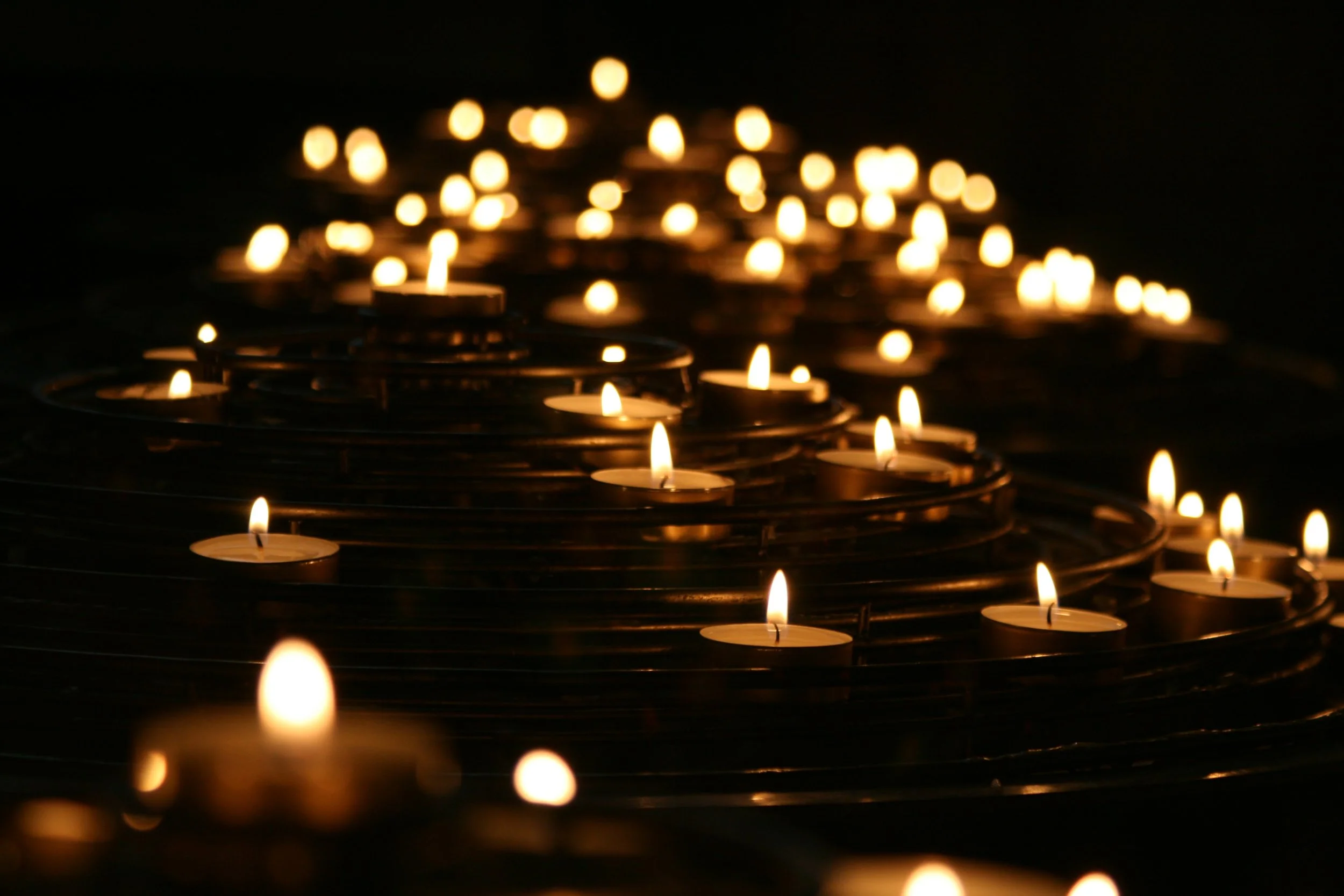
February finds me in the thick of several writing deadlines and poised to dive back into my Creativity Deck. I've managed to squeeze in a little bit of movement, but for the most part, I’ve been chained to my chair. February 2nd is Candlemas Day (the festival of lights) and Ground Hog Day (you know the drill, shadow = more winter, no shadow = less).

Photo by Mike Labrum on Unsplash
February finds me in the thick of several writing deadlines and poised to dive back into my Creativity Deck. I've managed to squeeze in a little bit of movement, but for the most part, I’ve been chained to my chair.
February 2nd is Candlemas Day (the festival of lights) and Ground Hog Day (you know the drill, shadow = more winter, no shadow = less). Both days occur at the mid point between the shortest winter day (winter solstice) and the spring equinox.
I've never been one for celebrating New Year, since it arrives so quickly after the winter solstice and Christmas. As a result, it just feels like too much party for an introverted soul such as myself. Then, February feels so dreary, cold, and well, meh. With no holidays (other than the supremely annoying and commercially driven Valentines Day) to lift us out of our doldrums. In this sense, Candlemas, with its festival of light, is the perfect antidote to the winter blues.
Historically, Candlemas was an ancient pagan festival that was (as most western holidays are) co-opted by the Christians. It was originally called Imbolc, meaning literally 'in the belly'. The metaphor being that the seed that was planted at the Winter Solstice is now germinating in the belly in order to be birthed in the spring. It also celebrates the return of light and one tradition is for people to express their wishes and hopes for the new year as they light a candle. I like this idea, and think this is the perfect time of year to meditate on such things.
So, for those of you who were simply too tired or too hungover on new years to contemplate your year ahead, you can do it tomorrow, on Candlemas/Imbolc. Alternatively, if you're in mood for something figuratively lighter, tune in to Punxsutawney Phil (the famous ground hog) or, even better, re-watch Ground Hog Day.

Sleep is for Winners
I read an interesting article in the New Yorker by Maria Konnikova about sleep. Among other things, it explores the effects of sleep deprivation on productivity. For example, a small sleep deficit (we’re talking six hours a night) led to serious cognitive and physical impairments; equivalent to a blood alcohol level of 0.1 per cent.

I read an interesting article in the New Yorker by Maria Konnikova about sleep. Among other things, it explores the effects of sleep deprivation on productivity.
What’s interesting to me, is how a small sleep deficit (we’re talking six hours a night) led to serious cognitive and physical impairments; equivalent to a blood alcohol level of 0.1 per cent. Konnikova reports that a person’s “cognitive and physical performance becomes virtually indistinguishable from that of someone who has been awake for twenty-four hours straight” (http://www.newyorker.com/science/maria-konnikova/the-walking-dead, p. 2). This is an extraordinary finding, considering that six hours of sleep a night is the new normal.
I find it curious that despite many articles like this and a significant amount of research; the popular belief is that sleep is a nuisance or something for babies, lazy people and the weak. I've noticed that people who consider themselves to be hardworking, strong and healthy, are usually the exception to the rule. Of course, some people might need to sleep, by they don't. This is why Margaret Thatcher and her infamous ‘four hours of sleep’ is held up as the paragon of virtue. The cognitive disconnect between what we need and what we think we need, is an anecdotal observation on my part. But it is born out by the research.
In a recent study by sleep scientist Elizabeth Klerman, the subjects were allowed to choose their own sleep schedules. As a result, “on the first day in the lab, during testing of sleep latency, some fell asleep before the technician had even left the room. Many of the subjects, in other words, were pathologically sleepy. Yet they thought they were fully awake and at their best” (http://www.newyorker.com/science/maria-konnikova/the-walking-dead, pg 4).
I’ve noted to producers how difficult it must be for film crews (particularly make-up, hair and costume) to get adequate rest. Because these departments often arrive early and leave late, they work additional hours on top of the scheduled twelve. Add the two hour travel time (standard in most cities with an active film industry), and you are looking at a sixteen hour day. Therefore, in order to get eight hours of sleep, a person must go to bed instantly without showering or eating. When I bring this up, the response is often; “well, they’re getting paid. Plus, who needs eight hours of sleep? Most people don’t need that. I mean, look at Margaret Thatcher...”
Regardless of compensation, the concern is that lack of sleep compromises productivity, creativity, cognition, and the ability to manage stress and regulate emotions. The knock-on effects are profound and even deadly. There have been instances of lorry (truck) drivers falling asleep at the wheel and killing others, and film crew falling asleep at the wheel and killing themselves. Interestingly, in the former case, the driver was blamed and sentenced, not the company. Yet he had been working for the company (doing maintenance) when he should have been sleeping. I suspect that he knew he was tired, yet under tremendous pressure to conceal it. As a consequence of stories like these, cinematographer Haskell Wexler (director of the documentary Who Needs Sleep) set up the nonprofit 12 On 12 Off to raise awareness of the issue.
For myself, when faced with losing sleep or skipping dinner, I would much rather skip dinner. And I’ve noticed that I function far better without food than I do without sleep. The question is, why should people be put in a position where they must choose between things that are essential to life and productivity? Even an ardent capitalist must see the foolishness in that.
Lack of sleep is something that effects us all. But systemic change is only possible when people acknowledge their exhaustion, and the subsequent impairment this entails. We need to rethink the old adage, “sleep is for wimps” and consider a new one. How about, “sleepiness makes stupidity thrive”? Or, even better, “sleep is for winners”.

Creativity Masterclass
Thanks to all of my wonderful participants in November's creativity masterclass in London, UK. We worked on deep listening, discovered the power of questions, followed the 'five whys', and reconnected with the creative process through play and joy.
Thanks to all of my wonderful participants in November's creativity masterclass. We worked on deep listening, discovered the power of questions, followed the 'five whys', and reconnected with the creative process through play and joy.
Christmas is a wonderful time to explore your creativity by making gifts, food, wrapping presents, decorating your home and tree and reflecting on your creative journey in 2018. Have a wonderfully creative Christmas!

Logic Process
I've been waiting for feedback on one of my projects and decided to get back to working on my creativity deck. I'm hoping I might be able to finish it by the time I die...or perhaps sooner! In order to speed things along, I decided to make the card for the Logic entirely digitally.

I've been waiting for feedback on one of my projects and decided to get back to working on my creativity deck. I'm hoping I might be able to finish it by the time I die...or perhaps sooner! In order to speed things along, I decided to make the card for the Logic entirely digitally. Well, almost entirely digitally. I still did an initial sketch and scanned that in first. Then I finished off the sketch in My Paint.
I did a crazy thing with the brain in the sketch - I wanted it to be transparent, so I added lines to show the signals between dendrites. But I decided it looked too 'star bursty' and would probably be more suitable to the intuition card.
Working digitally lends itself to a smoother more deliberate finish, which suited my android character. I thought it would be quicker than painting but it took just as long! If not longer...because I noodled around for ages and constantly hit delete. Sometimes, when you're painting, you mess up and it becomes a happy accident, or you paint over something, or you start over. This made it so that I never had to start over completely and because it was digital from the start, I didn't have to scan in the final painting. I created it on my Yinova drawing monitor using My Paint and GIMP.