

Re-Writing Tips
I just completed another draft of a feature script. I really like doing multiple drafts with reading space in between, because each new version is usually an improvement on the last. I find the process similar to the way I paint (in multiple thin washes). It takes a while to build up the color and each wash builds depth.

Photo by Dustin Lee on Unsplash
I just completed another draft of a feature script. I really like doing multiple drafts with reading space in between, because each new version is usually an improvement on the last. I find the process similar to the way I paint (in multiple thin washes). It takes a while to build up the color and each wash builds depth. Similarly, I find each pass on a screenplay or piece of fiction also builds more depth. The theme emerges, the weak points become clearer, and the diamonds hidden amongst the pieces of coal finally shine.
I can't stress the importance of rewriting enough. Yet this is often the thing new writers fear the most. Fear, schmeer. Brave writers are happy to start over from scratch (page one rewrite). Don't worry, you'll remember the good stuff and often surprise yourself with new material. I find if there is a lot of work to do on a draft, rewriting from page one is easier then cutting and pasting and adding in new scenes. At the risk of metaphor overload, It's like knitting a sweater; if there is one small hole, go ahead and repair it. If there are many holes, you often end up with a big messy pile of yarn. In this case, go back to your pattern (beat sheet) and start again.
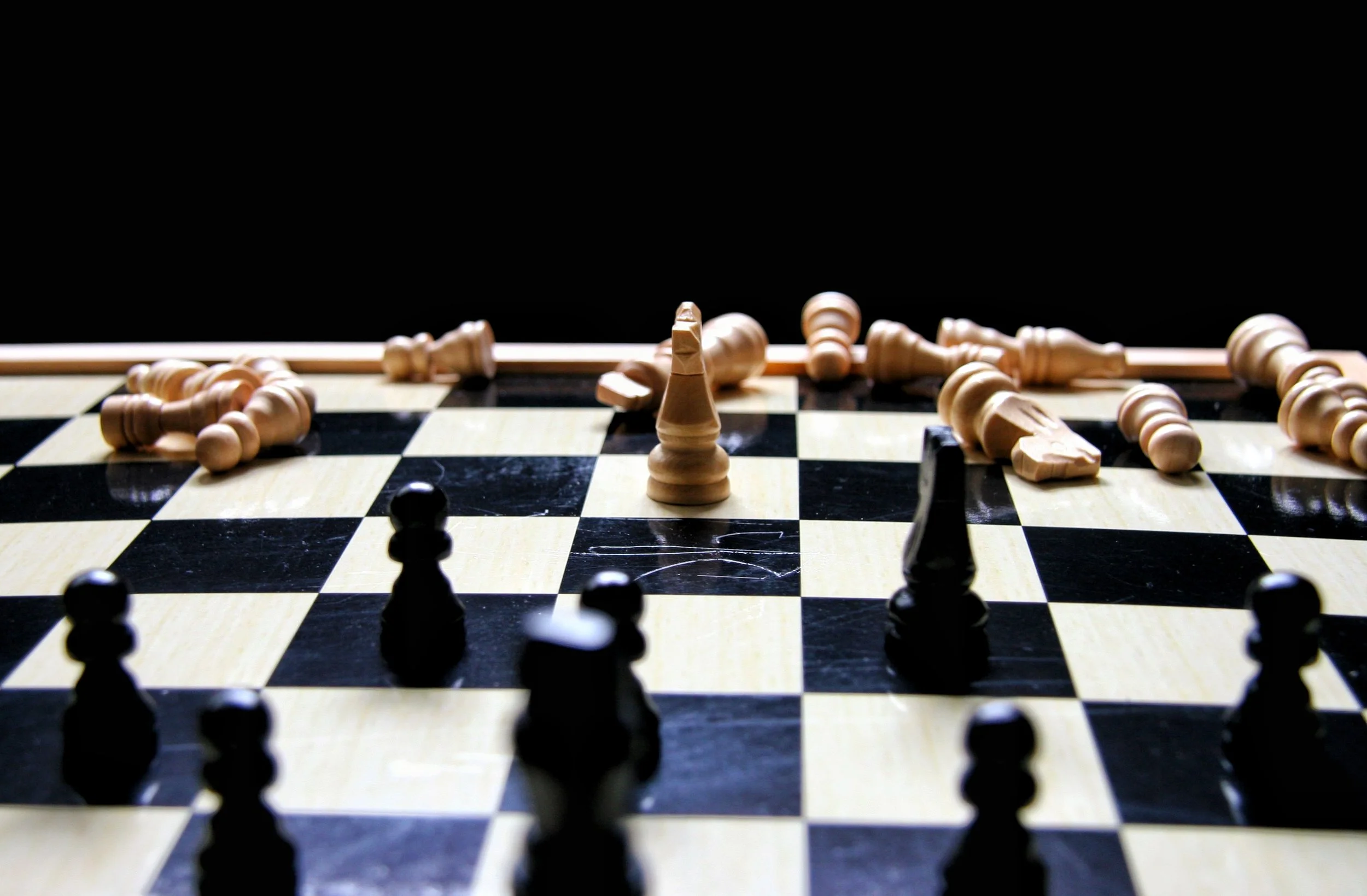
Leaves & Losing
After a busy September filled with writing and research, October finds me feeling fit as a fiddle and loving the change of season. In spite of the fact that the sun seems to disappear in an instant (how is it suddenly dark by 5!), I love the Autumn. The layers, the leaves, the melancholy....it's all part of the 'back to school' vibe I can never quite shake even though my school days are long behind me.
After a busy September filled with writing and research, October finds me feeling fit as a fiddle and loving the change of season. In spite of the fact that the sun seems to disappear in an instant (how is it suddenly dark by 5!), I love the Autumn. The layers, the leaves, the melancholy....it's all part of the 'back to school' vibe I can never quite shake even though my school days are long behind me. And as the baseball world series moves on to its final 7 game series, I find myself thinking about losing.
The worst thing is when a team loses at home. The winning team bounds triumphantly onto the field in a shower of sweat and champagne, while the losing side wanders through the dugout dejectedly patting each other on the back as their shell shocked fans sit around the stands with hang dog expressions that would make even The Grinch sigh...
Baseball blogger Dave Cameron touches on this HERE. Similarly, I've been thinking that it's important to remember that every time you win, someone else loses. I think this keeps you humble and grateful. So when the Cardinals trounced the Brewers, all credit goes to the lovely Albert Pujols (from the Cardinals) for pointing out that, despite their loss, the Brewers played well. Of course everybody wants to win, but the reality is, everybody doesn't. So this one's for the losers. May you learn something new from each try and come back a winner the next time!
The Value of Time
Freelancers are aware of the challenges they face in managing time, and most of us acknowledge that time is a valuable resource. Despite this, time is often squandered. Perhaps this is because time feels amorphous and can be difficult to quantify.
Photo by Fabrizio Verrecchia on Unsplash
Freelancers are aware of the challenges they face in managing time, and most of us acknowledge that time is a valuable resource. Despite this, time is often squandered. Perhaps this is because time feels amorphous and can be difficult to quantify.
I have been both freelance and a company director for the majority of my career. In my experience, freelancers often find themselves with too many concurrent projects, or with large gaps in between jobs. So the key is to manage your time when you have too much or too little work.
On the whole, people struggle to accurately assess the amount of time they spend on projects. Perhaps this is because our perception of time is influenced by mood. Consequently, arduous tasks seem to take longer, while pleasurable tasks fly by. We lose track of time when we focus on one task, and we lose track of time when we focus on many tasks. Finally, most of us estimate the time spent on a project at the end of the day / week, or at its completion, rather than recording it in real time.
I was curious about how I spent time. So I started using a time sheet app on my phone. Since collecting the data, I found that I do a fair amount of unpaid work on projects. This includes: meetings, creative prep, emails, notes, admin, etc., and it often amounts to an additional days work on a short project and much more on a longer project. This matters when you work on a daily rate. Even if you quote a weekly, or monthly rate, it is easy to lose track of how much work you do out of the office, the edit suite, the studio or away from set. I also found that I expected "grunt work" to take longer than it did, and I spent more time on fun or interesting tasks than I had originally allocated. No surprises there.
What about time in between jobs? In my case, I was accurate about creative tasks. On average, I spent three hours per day writing and three hours per day painting. This is what I expected. However, I massively underestimated time spent on company admin, bookkeeping, website and social media maintenance, exercise and research.
The reality is, many freelancers fail to use their downtime effectively. In addition to the obvious need for rest, this time can be viewed as a gift and is extremely valuable. Instead, freelancers often spend a lot of this time worrying, ironically, about time.
Like liminal social spaces such as carnival, this period in between projects is neither work nor leisure and it is full of potential. I like to cultivate curiosity during these periods; about my field, but also about the world in general. Our brains are plastic and malleable, with neural connections that grow and die and change in response to how we use them. For me, 'light bulb moments' happen more frequently when I feed my brain a variety of information.
Many people believe that there will come a point in their career when they "have arrived", so to speak. But in reality, that point never comes, because there is no end point when it comes to learning and creating. Plus, in a hugely competitive marketplace, there will always be new people nipping at your heels.
If you have stopped challenging yourself and expanding your skills, perhaps it's time to try something new. In which case, the time in between jobs is a golden opportunity to do so.
So use your time wisely and make sure you are appropriately compensated for it. Learn new things. Examine old projects to see how you might improve. Keep up to date on current methods, technologies and styles. Look at other people's work. Watch movies, go to galleries, take classes, travel, talk to people, and read, read, read. Most importantly, explore your preferences and grow your curiosity. Therein lies the road to passion.
****
When I was young and about to go out, my father never told me to be careful, or to call if I was going to be late. He never told me to play nice, to wear sunscreen, eat well, or to stay hydrated. Instead, right before the door banged closed, he would always shout "learn something!". As final words go, I think they work pretty well. And hopefully you've given yourself enough time to do so.
The Joy of Practice
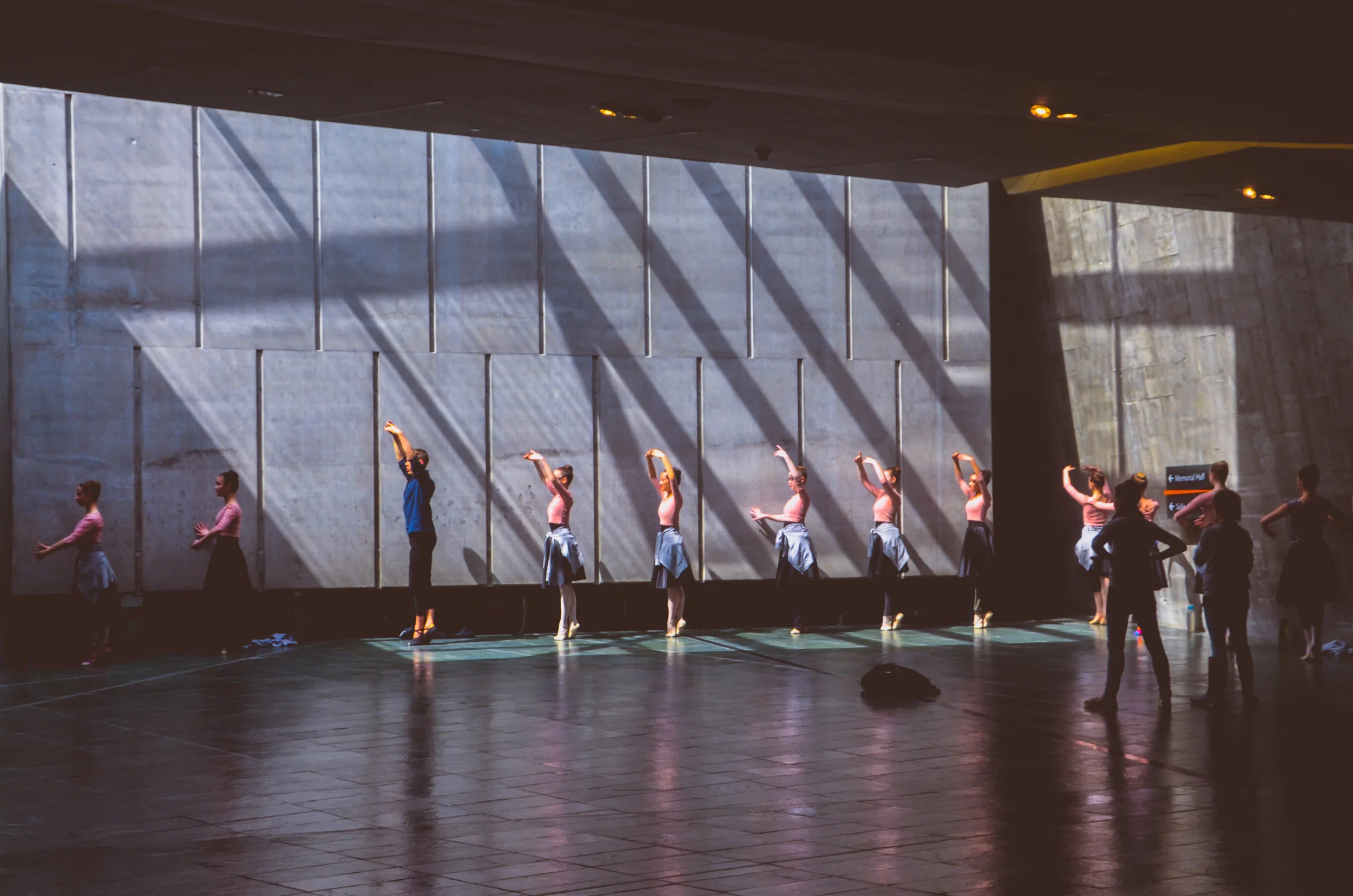
I've been pretty 'creative' my whole life and have turned my hand to a variety of art forms. As a teenager, I was a competent musician, I have been dancing, drawing and painting since childhood, and I've enjoyed writing on and off since college. I've also been cavalier in my approach and tend to drop and pick up media depending on my mood. However, throughout my years of creative practice there have been two constants: I remain curious and I enjoy practice.

I've been pretty 'creative' my whole life and have turned my hand to a variety of art forms. As a teenager, I was a competent musician, I have been dancing, drawing and painting since childhood, and I've enjoyed writing on and off since college. I've also been cavalier in my approach and tend to drop and pick up media depending on my mood. However, throughout my years of creative practice there have been two constants: I remain curious and I enjoy practice.
Practice is at the heart of everything I do, and it is, for me, the route to mastery. Innate talent may be a necessary prerequisite for success in art and in life, but if you don't enjoy practicing a skill in order to learn, grow and improve, that talent will be wasted. Most importantly, I don't think practice should feel like a chore. It should be an end in and of itself. If you genuinely enjoy the process of creation, the final result will not frame the whole of your experience. In a culture so enamored with product, it is easy to lose sight of this.
A wise man (Joe Maddon, the new manager of The Cubs Baseball team) said in a recent interview; 'don't ever let the pressure exceed the pleasure'. Something about this comment really resonated with me. I think it is easy to let this happen, especially when so much emphasis is placed on the quality of the product rather than the wonderful journey that lead to its creation.

Change, Trains & Flywheels
A friend of mine is an engineer. Let's call him Sam. Somewhere in the bowels of Sam's current work place, is on old steam engine. Obviously, this steam engine is pretty heavy, it is not made of feathers and it is not easy to move. I know, because Sam tried. He pushed it with all the force he could muster but...no movement. Then, one day, Sam decided to lean against the train for a while and...lo and behold...it began to roll.

Photo by Jake Sloop on Unsplash
A friend of mine is an engineer. Let's call him Sam. Somewhere in the bowels of Sam's current work place, is on old steam engine. Obviously, this steam engine is pretty heavy, it is not made of feathers and it is not easy to move. I know, because Sam tried. He pushed it with all the force he could muster but...no movement. Then, one day, Sam decided to lean against the train for a while and...lo and behold...it began to roll. Thankfully the wheels were braced, otherwise that old steam engine woulda rolled right outa that place with Sam clinging on to the rear. Anyway, get to the point you say, what does this have to do with change?
As any therapist worth their salt will tell you, the pace of change for most folks is pretty slow. We loop through unsuccessful patterns over and over, we get stuck in ruts, we engage in self defeating behaviour because 'that's just the way we are'. Sometimes we are aware we are doing these things, and sometimes we are not. Like Sam's train, it's pretty difficult to get people to change or move forward by just pushing (unless you give them an almighty HUGE push equivalent to a speeding train). Major life events like deaths, births and break-ups are the psychological equivalents of speeding trains. Of course, change is still possible without these events. But in this instance, a more effective strategy is to adopt the metaphorical lean, it might take a while, but eventually, it will get the job done.
So, what does this have to do with flywheels you say? Other than rhyming (sort off...) with automobiles (you know, as in Planes, Trains and....erm, yeah, I'm a genius).
A flywheel is a mechanical device that uses a significant moment of inertia for rotational energy. A moment of inertia is a measure of an object's resistance to changes in its rotation. Flywheels resist changes in their rotational speed to help steady their rotation. To put it more simply, flywheels, like people, resist change to remain steady. Because, let's face it, change is hard. It is the opposite of steady, it rocks the boat, it capsizes us, it sends us hurtling forward, or backward or sideways into new and uncharted territories. And yet, change is essential and unavoidable. So, have patience with yourself and others when attempting to change internal or external states. And resist the temptation to push too hard, as this will often have the opposite effect.

Why Less is More
I just finished reading 'Essentialism: The Disciplined Pursuit of Less' by Greg McKeown. I actually bought this book by accident. I thought it was going to be about the philosophical concept (that, for any specific entity, there is a set of attributes which are necessary to its identity and function)... but it turned out to be a book about managing your work load, your life, your ambitions, your time and your identity.
I just finished reading 'Essentialism: The Disciplined Pursuit of Less' by Greg McKeown. I actually bought this book by accident. I thought it was going to be about the philosophical concept (that, for any specific entity, there is a set of attributes which are necessary to its identity and function)... but it turned out to be a book about managing your work load, your life, your ambitions, your time and your identity.
The core premise is that rather than doing too much and spreading ourselves too thin, we focus on the core project and ideas that will move us forward. In many respects, it shares ideas with Agile strategies from the worlds of software design and management, and like those, takes a critical look at multi-tasking and trying to do it all. The main take away for me is to carefully consider what projects I choose to take on and to accept that some opportunities must be rejected in order to have enough space and time to focus on the things I am most passionate about. In a world in which the pursuit of more, more and even more is presented as the ultimate goal, the concept of less is a much needed anti-dote.

The Mystery of Motivation
Lately, I've been thinking a lot about motivation. Not surprising, given that I have an occupation that requires a great deal of the stuff. As most free-lancers know, motivation is a slippery old fish. When working from home, procrastination often rears its ugly head. The lure of the snooze button is a constant, and planning, shopping and cooking always seem to eat into a large portion of the day.
Lately, I've been thinking a lot about motivation. Not surprising, given that I have an occupation that requires a great deal of the stuff. As most free-lancers know, motivation is a slippery old fish. When working from home, procrastination often rears its ugly head. The lure of the snooze button is a constant, and planning, shopping and cooking always seem to eat into a large portion of the day. Finally, one's impeccably neat office suddenly seems in need of further tidying when there's work to be done.
Note the following case in point. A friend of mine (now a very successful Hollywood director) once confessed that he spent an entire year sitting around the house playing video games and watching films when he was supposed to be writing screenplays. What's odd is that this guy loves writing and making films pretty much above all else. So, what gives?
The Neuroscientist Candace Pert claims that the brain is primarily motivated by the pursuit of pleasure. Yet, as in the case of my friend the director, even when an activity is pleasurable, people still struggle with motivation. Furthermore, the path to pleasure can be circuitous at best, and often includes a fair amount of pain. For instance, what motivates someone to climb Everest when the journey is so treacherous and, let's face it, uncomfortable? Is it the moment of bliss at the summit? Or the pleasure that results from the achievement of something so arduous?
There seems to be a relationship here between a task's relative difficulty (i.e. how challenging does something need to be in order to motivate) and our enjoyment of it. If something is too easy, we get bored. But if the mountain is too high to climb, motivation wanes. So we need to feel like something is both challenging and achievable in order to feel motivated and we enjoy doing things we are good at. 'Achievability' obviously varies from person to person and through time, so it's possible my film maker friend didn't feel ready or skilled enough to tackle his screenplay and this impacted his motivation.
In his book Obliquity, the economist John Kay notes that profit is an ineffective motivator for businesses. Hence, when a company places profit at the centre of its strategy, it is often less profitable then an organisation that is motivated by things like innovation or the needs of the public and its workers. So companies that have a clear set of values which are then manifested through external goals are financially more successful then those whose only goal is financial success. Similarly, people who are motivated by something other than money or happiness, often end up with, ironically, money and happiness. The American founding documents talk about 'the pursuit of happiness' as a primary motivation for people, and yet it appears as though happiness is a side effect of something much larger. The question is, what is it?
There is an argument that we are motivated simply to survive and procreate. Yet for most people, these basic motivations rarely lead to a sense of fulfilment. Rather, it seems that a sense of meaning beyond basic survival is the wider theme that motivates us. We want our lives to have value and values are essentially the foundations of our lives. They are the glue that binds our motivations together and anchor our internal states to the external world. Similarly, a core of shared values is elemental when building a social community, whether that community is a business, a group of friends, a political party, or a family. Ultimately, we want our lives to have meaning and to share that meaning with others.
Still, as Pert indicated, if there is no pleasure in the pursuit of meaning, whether that pleasure is immediate or delayed, we can easily become de-motivated. So, to paraphrase a wise old friend of mine, the key to a motivated life is this; "Step One: find stuff you like. Step Two: get good at the stuff you like and ideally get paid for doing it. Step Three: find people you like and share the stuff you like with them" And the delightful side effect of this three point plan is...happiness. Simply put indeed.

Babip, Baseball and Bad Luck
There's a baseball statistic called BABIP, or, Batting Average on Balls In Play, that measures how often a batter reaches base on balls that he hits into the field of play. A good batter who hits a lot of line drives may be a perennial all-star, but if his line drives keep rocketing straight to where fielders happen to be waiting, he can look like a minor-leaguer for months on end.
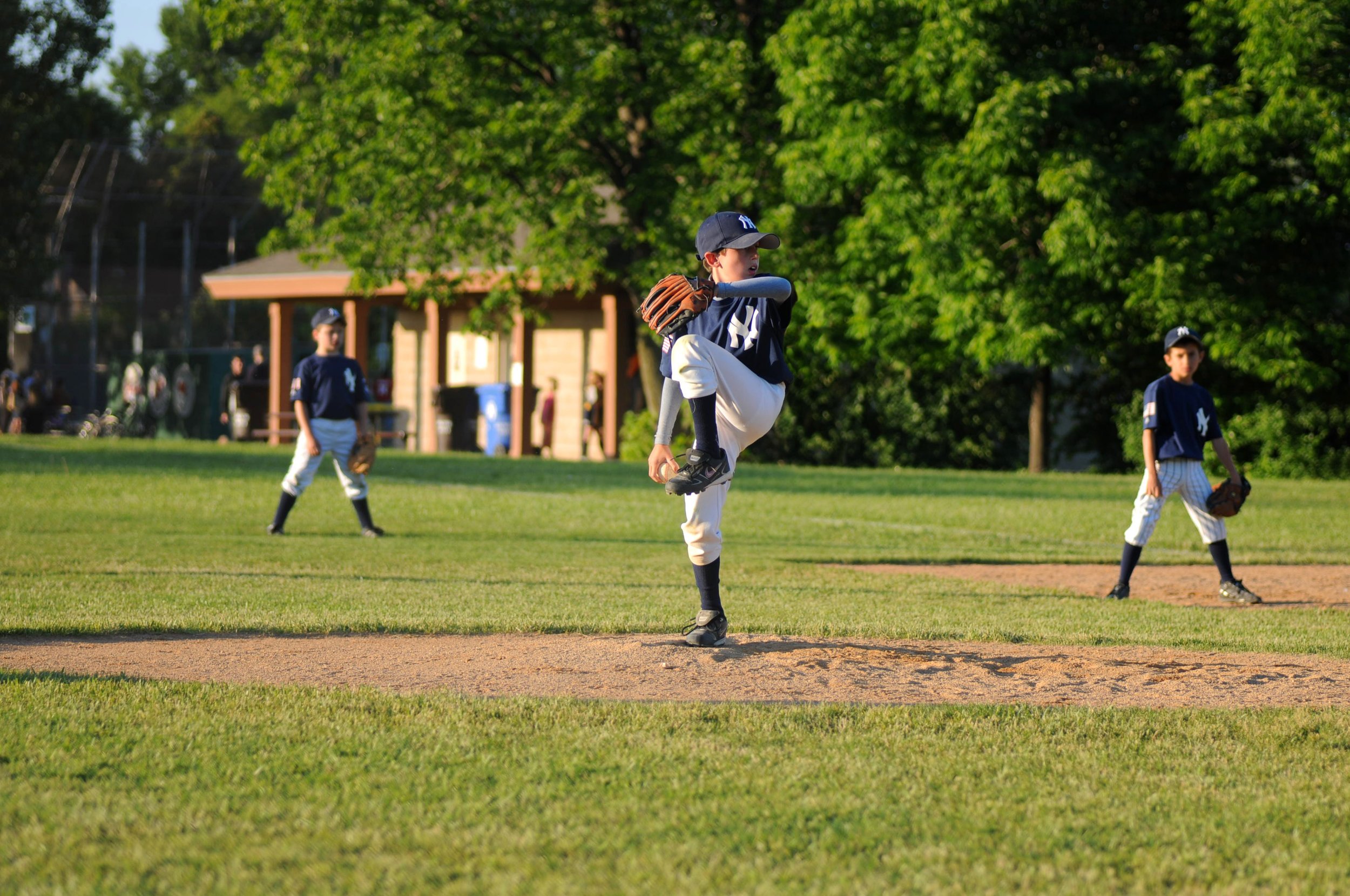

There's a baseball statistic called BABIP, or, Batting Average on Balls In Play, that measures how often a batter reaches base on balls that he hits into the field of play. A good batter who hits a lot of line drives may be a perennial all-star, but if his line drives keep rocketing straight to where fielders happen to be waiting, he can look like a minor-leaguer for months on end. (BABIP can also be applied to pitchers -- check out Pitching BABIP: The Luck Dragons for an excellent little film about this -- but let's focus on batters in this metaphor). BABIP is affected by three factors:
DEFENSE: A batter could hit the ball to a particularly talented fielder who makes a play on it and throws the batter out, or he could hit it to a lousy fielder who lets it fall for hit.
SMALL CHANGES IN TALENT: Over the course of a season, batters, just like other people, go through periods of adjustment. Perhaps they develop a better swing, or pitchers learn to adjust to a batter's swing and start striking him out, or maybe a batter is simply having a very strong season and hitting at the peak of his talent.
LUCK: A batter just so happens to hit a line drive in between two fielders, or a fielder shifts his position slightly just as the ball is hit, or the wind is high that day and pushes a ball into or out of the park. Luck also plays a part in injury. Of course, players, like dancers, have a certain amount of control over their tendency to be injured due to training styles, correct technique etc, but that's something I'll discuss in a future post.
The point is, luck plays a healthy role in a player's BABIP, even when it comes to hitting the ball to an elite rather than mediocre fielder. Equally, this idea can be applied to any elite performer or artist. Of course, a performer's talent level can change: for instance, dancers can learn a new style or improve their technique. But luck affects career success more than one might think.
For example, if dancers are injured through no fault of their own, this will still impact their dancing for a while, and this is bad luck. Alternatively, styles of dance wax and wane in popularity, and if a particular dancer doesn't reflect the zeitgeist of the year, no matter how talented they might be, they won't get cast. However, once they are healed or their style comes back into fashion, one would expect that performer to return to their career average level of output (two jobs per month for example). Similarly, when an artist throws an idea out into the ether, both luck and talent determine which idea will be a hit, and which turns out to be a dud.
In light of the recent recession, many of us (myself included) have found ourselves questioning how much actual control we have over our lives. What role does luck (good or bad) play in our successes and failures? Is it true, as Richard Wiseman argues in his book The Luck Factor, that we create our own good luck? And if so, does it follow that we also create our own bad luck? Similarly, if we possess total power over our external circumstances (as the promoters of The Secret would have us believe) then how do we explain the current economic malaise? Did we all collectively manifest the troubling sequence of events that led up to the collapse of Lehman Brothers? Or was this the result of systemic weaknesses or fault lines that had been present for years, awaiting a metaphorical quake? I don't mean to suggest that the financial crisis happened because of bad luck -- people who should have known better really did screw it all up. But for choreographers, dancers or film makers, who had little or no control over the financial system, the timing of other people's failures may have created a period of bad luck in their careers.
It's interesting to note that when you ask someone to share the secret of their success, the answer usually involves a lot of hard work, talent, pertinent connections etc. On the other hand, when you ask someone why they haven't had much success, the answer is often well... dumb bad luck. So where is the 'truth' here? I would suggest that it's most likely somewhere in middle. While there is certainly a grain of truth in Wiseman's assertion that we have some control over luck (few would argue that having a positive attitude in a job interview is a bad idea), sometimes bad things do happen to us, in spite of our hard work, preparation, talent, positive attitude and connections. Which brings us back our perennial all-star and his outlier season. He had a run of bad luck which brought down his stats, but it is likely that his BABIP will eventually return to the mean, just like our injured dancer's.
The moral of the story? Life, like baseball, is complex and unpredictable. Sometimes, the illusion of control is necessary to maintain an optimistic attitude and the energy to persist despite less than ideal circumstances. Conversely, if we attribute everything that happens in our lives to chance, then what's the point? We might as well stay in bed and let the proverbial wheel of fortune turn. Ultimately, hard work, passion, talent AND luck get us onto the playing field, but once we're there, sometimes the prevailing winds will knock a home-run ball straight down into a fielder's glove, and, well...that's life, isn't it?

The Optimism Bias
I've been reading a book called 'The Optimism Bias' by Tali Sharot. In a nutshell, the premise of the book is that people tend to have a cognitive bias towards optimism, and that this bias has been naturally selected for because it helps us to get things done, to move forward, to procreate.
I've been reading a book called 'The Optimism Bias' by Tali Sharot. In a nutshell, the premise of the book is that people tend to have a cognitive bias towards optimism, and that this bias has been naturally selected for because it helps us to get things done, to move forward, to procreate. The reality is, most of our futures will be filled with a mix of negative, positive and neutral experiences. And yet, most people imagine their futures to be much rosier than they will turn out to be. Those of us who view the world more realistically are said to be mildly depressed. As I've said elsewhere in this blog, a little positive thinking is surely a good thing, and numerous studies have shown that a positive view of the future can and often does become a self fulfilling prophecy.
And yet, it seems to me, that a little depressive realism can be a useful thing. Perhaps, if a few more finance wizards and government officials saw the glass for what it actually was (sometimes half full, sometimes half empty, sometimes on the swift path to empty because its been spotted by a very thirsty giant...) many of the pickles we, as a society, currently find ourselves in, might have been avoided.
The reality is, things don't always turn out well. People get sick, people die, markets fail, buildings fall, the earth shifts, divorces happen. The oddest thing, is that people are quick to accept that bad things do and will happen to others, and yet, we rarely imagine a future for ourselves with difficult things in it. In our own projected futures, we win Oscars, we get rich, we have perfect marriages and angelic children. This is of course, a mathematical and logical fallacy. Who are the people bad things are happening to if not us? Are we not the people?
Nevertheless, the optimism bias remains firmly in place for most of us, because to see the world as it really is: i.e. a slow (or swift) march to death with pleasures and pitfalls and boring bits, just isn't that much fun. And let's face it, if our past and our futures are ultimately stories we tell ourselves, we might as well accentuate the positive, cut out the dull parts, and write ourselves a good old fashioned Hollywood ending.

When Hope is the Only (and best) Option
When life throws you a serious curve ball that’s impossible to hit, and you have little or no control over external circumstances; sometimes HOPE is the only option.

Photo by Litza Bixler
When life throws you a serious curve ball that’s impossible to hit, and you have little or no control over external circumstances; sometimes HOPE is the only option.
This idea is explored beautifully by baseball analyst Dave Cameron (no, not THAT Dave Cameron) when faced with a diagnosis of Acute Myeloid Leukemia. Click HERE for the full post. So if you have any hope juice to spare, please share it with Dave!
Muscles, Memory & Movement
When the body performs a movement, the muscles and the brain send messages to each other, forming a neural feedback loop that will be reactivated the next time this movement occurs. Sometimes, this loop can be interrupted or malformed through injury or bad habits, resulting in injury or muscular atrophy. Lately, I've also been wondering whether some of these feedback loops are actually sub-optimally formed during early development.
When the body performs a movement, the muscles and the brain send messages to each other, forming a neural feedback loop that will be reactivated the next time this movement occurs. Sometimes, this loop can be interrupted or malformed through injury or bad habits, resulting in injury or muscular atrophy. Lately, I've also been wondering whether some of these feedback loops are actually sub-optimally formed during early development.
For instance, it seems that babies learn movement patterns through trial and error and in a relatively specific order (eg: certain muscular patterns must be activated in order to crawl, walk etc.). The baby throws its arm out to the side and the brain says oh, that's my arm, and it can do that, wow! Gradually muscular patterns are developed that allow the baby to perform complex movement tasks. However, it seems to me that these patterns can be interrupted as it were, by accidents, injury and genetic predispositions, and as a consequence, a baby can form various 'work arounds'. The result is a series of sub-optimal movement patterns that are then in place for life. I wonder whether some injuries later in life are the result of these flawed patterns, and whether the patterns then need to be reset in order to encourage healing. Anyway, certainly food for thought.

Bodies, Balance & Nirvana
People who work in physical professions are aware of the importance of muscle balance in performance. Ideally, each muscle works at an appropriate intensity in a state of equilibrium with other muscles. The spine is perfectly aligned, ligaments and tendons are neither too short nor too long. Similarly, the goal of self actualization

Photo by David Hoffman on Unsplash
People who work in physical professions are aware of the importance of muscle balance in performance. Ideally, each muscle works at an appropriate intensity in a state of equilibrium with other muscles. The spine is perfectly aligned, ligaments and tendons are neither too short nor too long. Similarly, the goal of self actualization or Nirvana is an equally balanced psyche that is perfectly, emotionally in tune and free of negativity.
However, in this quest for the ideal body or self, are we in fact ignoring or trying to change the things about ourselves that make us unique? For example, the choreographer Bob Fosse had a significant internal rotation in his legs, as a result, he found Ballet difficult. However, rather than spend all of his energy trying to correct this ‘flaw’ he made it a feature of his choreography. As a result, internally rotated legs is a unique aspect of his work.
Whether it’s a hyper-extended back, pigeon toes, a long neck, flat feet or too much or too little flexibility. It seems to me, that at some point, it is important that we work with what we have. There is no one ‘perfect’ posture for all people. We are surprisingly different. In addition, things like posture and stance are effected by culture and quotidian behaviour. if you spend a lot of time squatting by a fire (rather than sitting at a desk), this will impact your body shape and muscle balance. If you look at the way African Pigmy people stand, their backs are relatively hyper-extended, and I suspect all those Pilates folks will be shaking their heads in dismay….and yet, Pigmies seem to have few (or at least report few) instances of back pain.
Likewise, one person’s Nirvana is another person’s hell. I believe we ultimately know what is best for us. And while it is tempting to place all of our power in the hands of experts such as doctors, therapists and trainers; we should also develop a deep awareness of our own bodies and needs and trust that it is possible to intuit the best way to address injuries, whether they be physical or psychological.
This is not to say that an expert perspective is not helpful, because it often can be. But rather that building a sense of trust in our own ability to grow and bring ourselves into balance is an equally essential component of somatic health.
Finally, there is no perfect body or personality, and we often achieve greatness when we embrace our flaws and find ways to turn them into strengths.